
Pile cage welding machine for bored piles and drilled shafts up to Ø2000 mm.
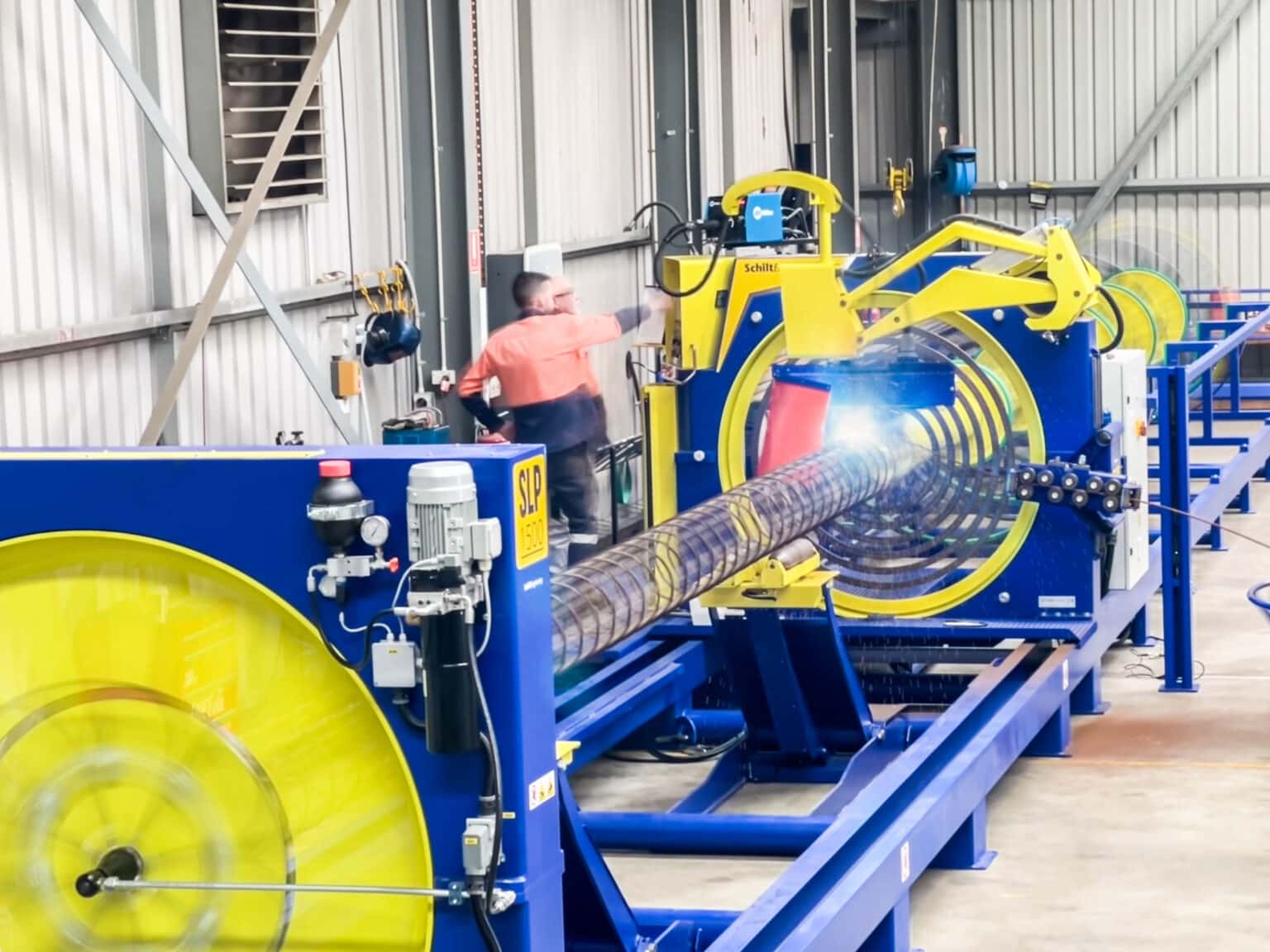
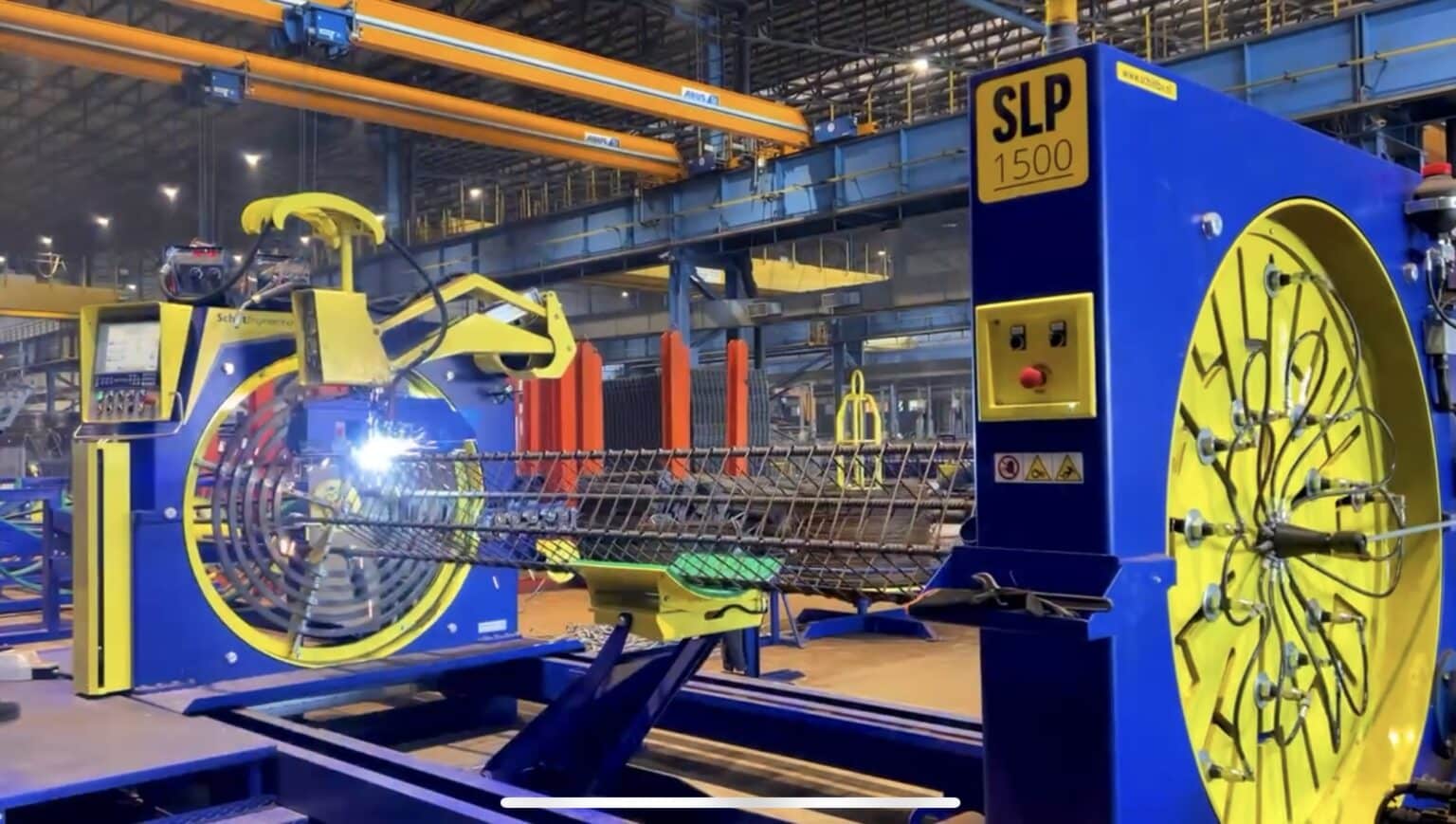
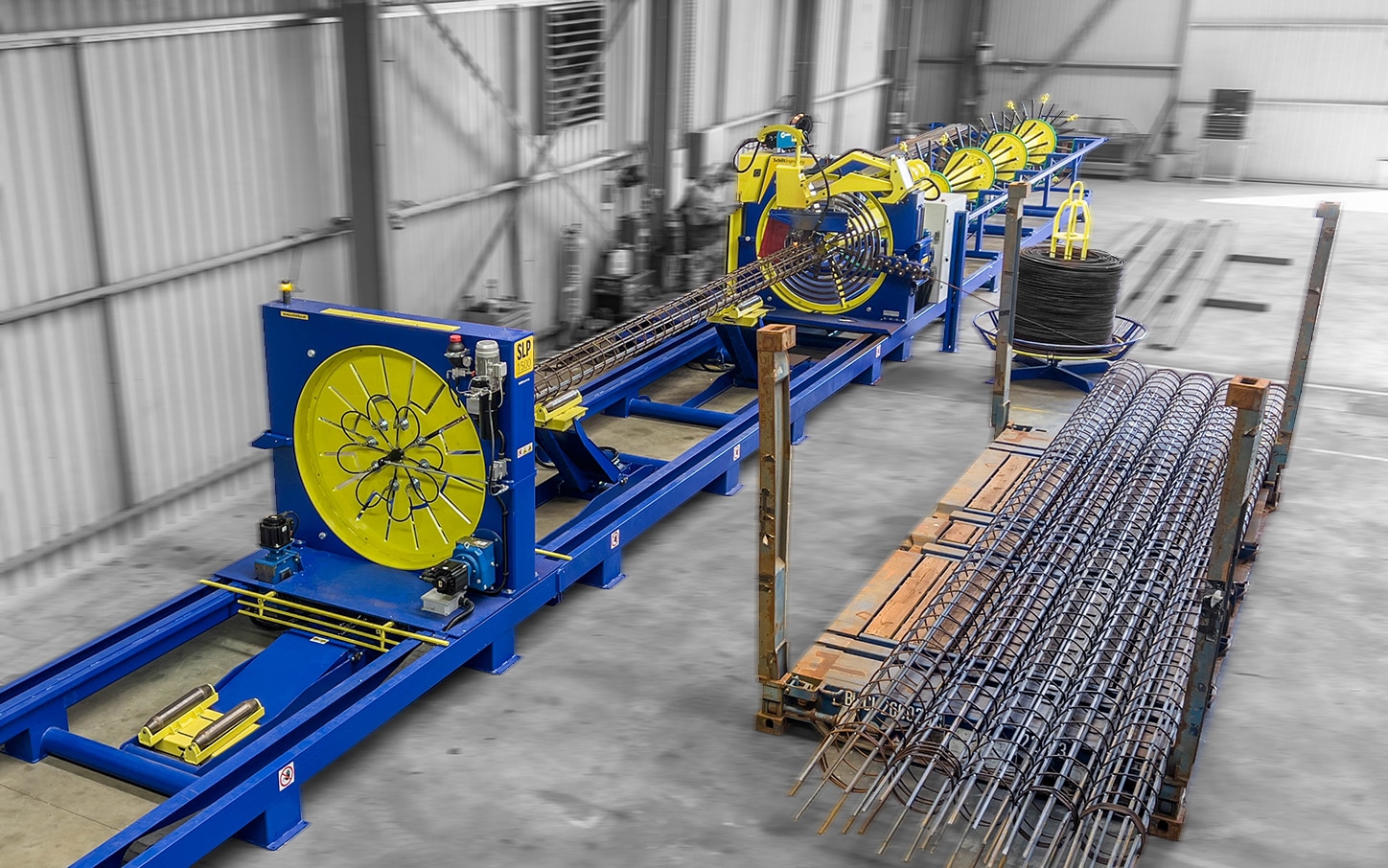
Three models on one shared frame — SLP 1200, 1500 and 2000 — welding reinforcement cages up to Ø2,000 mm (78 in) and 24 m (79 ft): the cages of buildings, metro lines and bridges.
Three models. One frame. Your cage diameter decides.
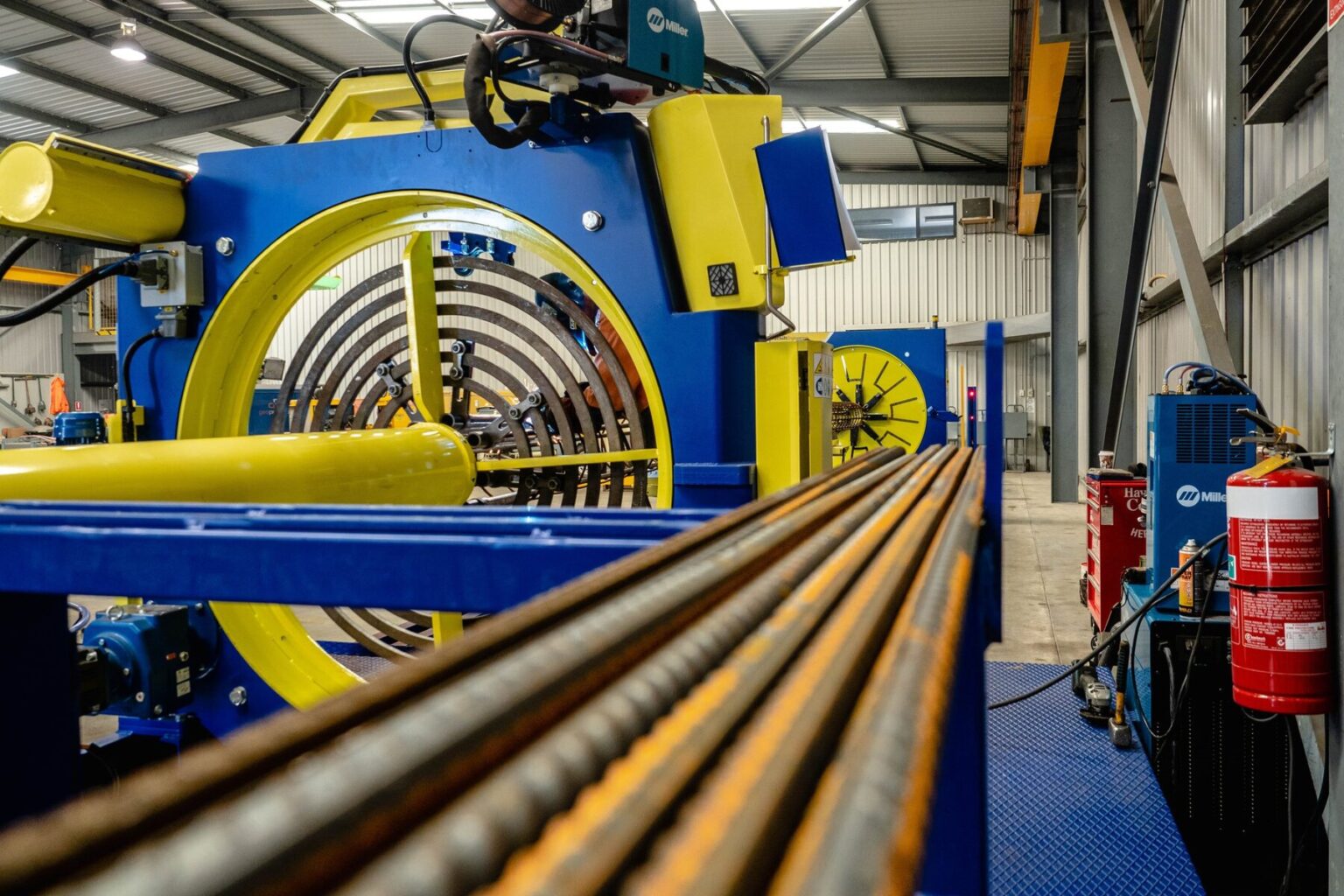
The SLP 1200, 1500 and 2000 share the same structure and components: the same spare parts, the same training, the same PLC. What changes is the cage envelope — so you buy the diameter you produce, not a bigger machine than you need.
SLP 1200
Cage Ø 150–1,200 mm (5.9–47″)
Length 12–24 m (39–78 ft)
Max. cage weight 5 t (11,000 lb)
Bars 12–32 mm (40 mm on request)
Spiral 6–16 mm · pitch 50–500 mm
Installed power 11 kW
SLP 1500
Cage Ø 200–1,500 mm (7.9–59″)
Length 12–24 m (39–78 ft)
Max. cage weight 8 t (17,600 lb)
Bars 12–32 mm (40 mm on request)
Spiral 6–16 mm · pitch 50–500 mm
Installed power 11 kW
SLP 2000
Cage Ø 400–2,000 mm (16–78″)
Length 12–24 m (39–78 ft)
Max. cage weight 10 t (22,000 lb)
Bars 12–32 mm (40 mm on request)
Spiral 6–16 mm · pitch 50–500 mm
Installed power 11 kW


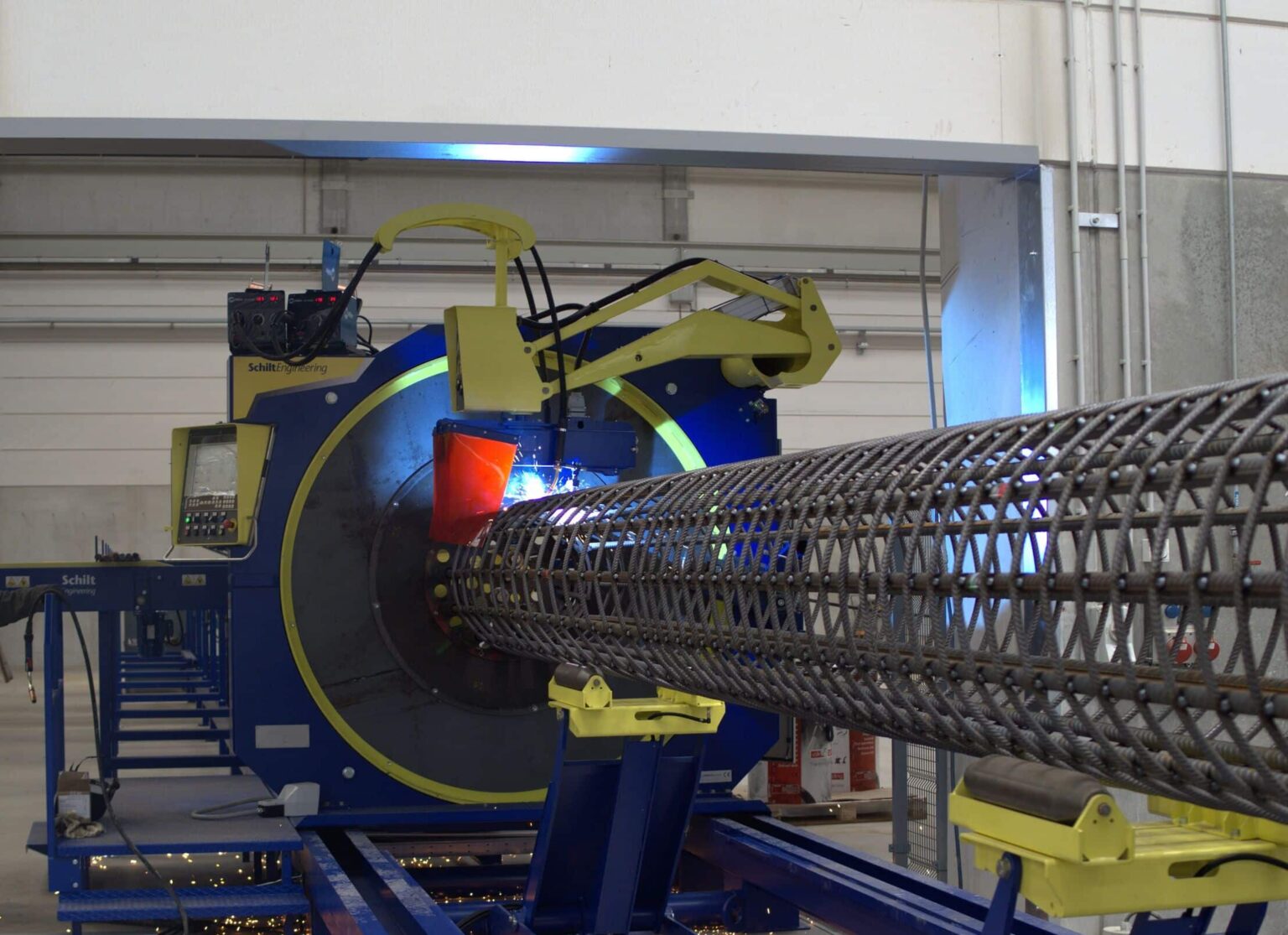
Repeatable output is the whole argument.
Weld triggering, weld time and welding parameters are managed by the PLC and saved as recipes. A weld executed with set time, current and voltage can be tested once and repeated thousands of times — which is what lets your engineers put a procedure on paper and keep it under control.
See the welding technology →Constant weld time
Independent of rotation speed, on every crossing of every cage.
MIG welding under PLC control
Parameters set, checked against a preset window, with an alarm below threshold.
Dual-torch welding, optional
A second MIG torch can be added to shorten the welding cycle on every cage.
Barcode and data
Job loading by barcode, diagnostics, and production data export.
Three markets, three conversations. We know all three.
How a pile cage is joined is a local culture. The machine is the same; the conversation is not.
United States: “cages are tied, not welded”
True as common practice — FHWA guidance describes tying every crossing, and welding calls for weldable steel such as ASTM A706 and procedures under AWS D1.4. That is exactly where a machine changes the question: manual tack welds are hard to guarantee; a PLC-controlled weld with set parameters is something your engineer can qualify once and reproduce on every cage. The SLP is not “AWS certified” — no machine is. It gives your shop the repeatability a WPS needs.
Australia: prefabricated cages are the standard
Welded, factory-made pile cages are how the market already works, and the conversation is procedure and traceability against AS 1554.3, lifting and quality documentation. PLC-managed parameters and recipe records give your QA something to file, not something to argue.
Singapore: off-site fabrication by design
DfMA and off-site fabrication are policy. Moving cage production from the site to a factory line is precisely what the SLP is for — series cages for bored piles and barrettes, produced indoors, delivered to the rig.
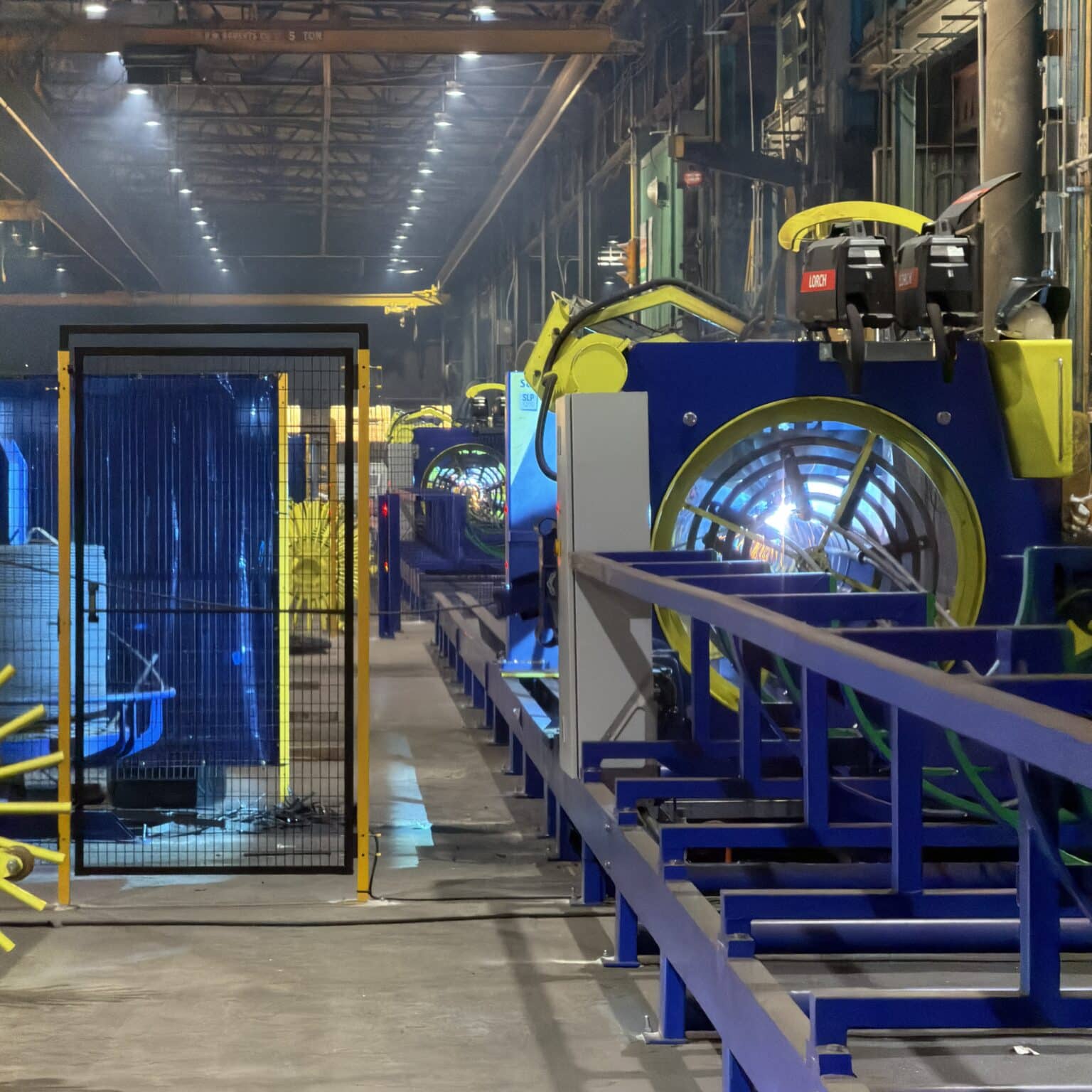
Four SLPs, side by side, in one plant.
Building cages for large infrastructures. When the customer needed more capacity, they added more SLPs. Another contractor comes back to EMG project after project, for high-rise and infrastructure cages.
Customer names and locations under NDA.
An ocean away is not a problem.
Operators are trained on site by EMG. The machine ships in containers, is installed and commissioned by the engineers who designed it, and stays connected for remote diagnostics. Components are standardised across models, so spare parts are shared and inventories stay small.
Service and support →
The same interface, recipes and spare parts on all three models.
Questions we hear from buyers.
Weld or tie — which is right for us?
It depends on your market and your engineer of record. Where tying is the norm, the machine’s case is repeatability: PLC-set parameters that a qualified procedure can be built on. Where welded cages are standard, the case is throughput and traceability. We can talk through both, with your drawings on the table.
Which of the three models do I need?
The largest cage you produce decides: Ø1,200, Ø1,500 or Ø2,000 mm. The frame, components and controls are the same. If most of your work is smaller, look at the SLP 650; if it is larger, the SLP 2500 and 3000.
How many cages per shift?
It depends on diameter, bars, spiral and pitch — anyone who answers with one number is selling. Send your typical cage and we reply with an estimate for your configuration, like the measured example on the SLP 650 page.
What about bar steel in the US?
Welding calls for weldable bar — ASTM A706 is the usual specification. Qualification of procedures is your side of the table; set, recorded welding parameters are ours.
What does delivery look like?
Container shipping, installation and operator training on site by EMG engineers, remote support afterwards. Ask for lead times with your quotation.
Answers in brief. For your cage drawings and production targets, an EMG engineer replies with the full picture.
